Refugee Services Facilitates the Resettlement Process By:
Join us in creating a supportive community for refugees seeking safety and a fresh start in Lansing. Together, we can make a difference.
Join us in creating a supportive community for refugees seeking safety and a fresh start in Lansing. Together, we can make a difference.
Picking up refugee clients from the airport
Locating safe, affordable housing and providing home-purchasing education
Providing furniture, basic household items, and food
Referrals to ESOL classes
Connection to community resources and volunteers
Enrolling children in school
Transporting and assistance for health screenings and medical follow-up
Providing extensive cultural orientation and financial literacy classes
Applying for necessary documents & programs that are funded through the U.S. Department of State
Employment services
Obtaining Michigan identification
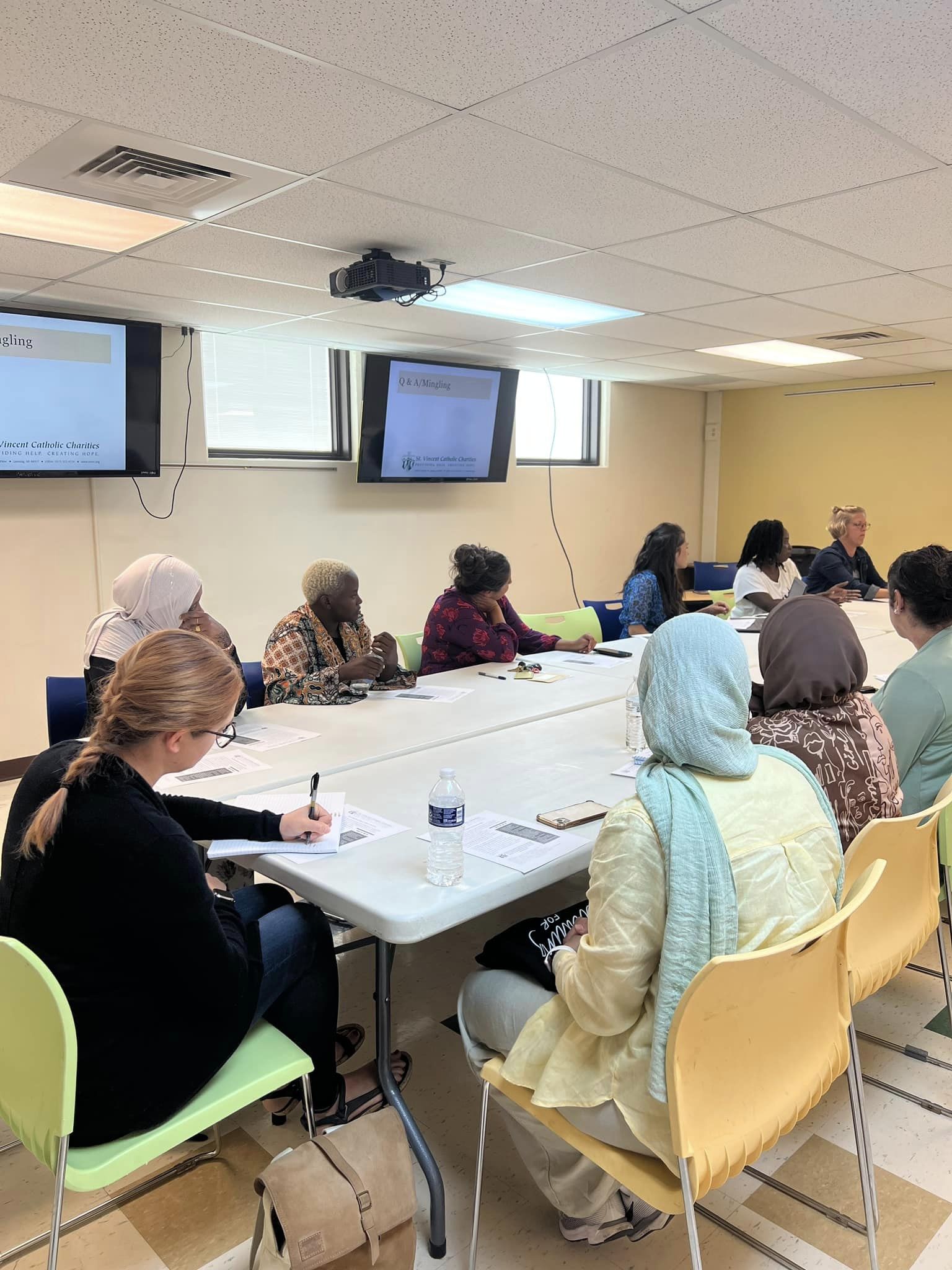
Refugee Services
St. Vincent Campus
Monday – Friday 8AM – 4:30PM
(517) 323-4734 ext. 1401
Our St. Vincent Campus has been a beacon of hope for refugees in mid-Michigan for over 45 years. Through a federal government program, our Refugee Services assist with the basic essentials to welcome refugees to the Lansing community and help them reach self-sufficiency. We provide compassionate support and essential services to those fleeing persecution, helping them rebuild their lives with dignity and respect. We are committed to welcoming refugees from around the world, offering them a safe haven and the opportunity to thrive in a new community.
Frequently Asked Questions About Refugee Services
What is the difference between a refugee and a migrant?
A migrant is someone who leaves their country voluntarily, to escape poverty, join family members or seek better opportunities. A refugee is someone who flees their country because of persecution or violence based on race, religion, nationality, membership of a particular social group, or political opinion. Someone can only be considered a refugee after they have been interviewed by the United Nations and granted refugee status.
What is the security screening process for refugees before they enter the United States?
The United Nations gathers personal information about each person seeking refugee status and conducts an interview to determine the validity of their story. Only the most vulnerable refugees, less than one percent, are considered for third country resettlement, like the United States.
If a refugee begins the process to be resettled in the United States, they must undergo a thorough vetting process, which can take up to 18 months. Their personal information, including iris scans and fingerprints, are checked and verified by the National Counterterrorism Center, the FBI, the Department of Homeland Security, the State Department and many other government agencies to check for any record of criminal history, ties to terrorism or bad actors, or to determine whether they would be a security risk for any reason.
Who is eligible for your program services and for how long?
Eligible populations for services are refugees, asylees, Special Immigrant Visa holders, Cuban/Haitian entrants, Humanitarian Parolees, and adult victims of human trafficking. Resettlement services are provided for 90 days from the date of entry to the U.S., but health services are usually provided for up to 6 months. Additional wrap-around services are available for up to 5 years, including employment services, Preferred Communities (or intensive case management), and post-resettlement support.
Do refugees depend on government subsidy to live in the United States?
Refugees are required to repay the United States government for their travel to the United States, which helps incoming refugees to start building financial credit. The government holds standards for refugees, such as being employed within six months of resettlement, for those that are physically able. During the interim refugees are given a very modest stipend to help them restart their lives in the United States. For instance, a single person who comes to the U.S.A. will receive $304.00 a month for their bills and rent until they have become employed.
On average, refugees have repaid the United States for their resettlement and have also begun putting additional dollars into our system within five years. Refugees in fact stimulate our economy; they bring cultural diversity, start businesses that create jobs, build our stable work force and revitalize housing. Additionally, they go through extensive background checks before approved for resettlement. CCIEC is a designated refugee resettlement agency mandated by the federal government to assist with the basic essentials to help welcome our new neighbors.
Who funds the refugee resettlement programs?
Refugee Resettlement programs like CCIEC are paid for by the State Department and other private and government grants.
How long does it take for a refugee to be resettled in America and who can help with the process for family members?
The total processing time varies depending on an applicant’s location and other circumstances, but the average time from the initial UNHCR referral to arrival as a refugee in the United States is about 18-24 months. If family members are still overseas, individuals can work with Immigration Lawyers on family reunification.
Why Do We Resettle Refugees?
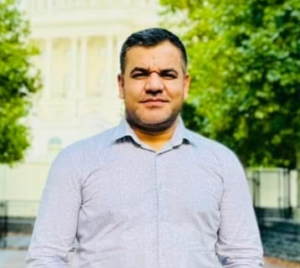
“Having experienced the hardships of becoming a refugee twice in my life, I am deeply moved by the mission of Catholic Charities to support immigrant and refugee communities, transcending borders and standing firmly against hate.”
– Bilal Wardak, Former Director of Refugee Services
As a Catholic agency, we resettle refugees because we adhere to the Catholic principle that every human life has value. Refugees are people who “owing to a well-founded fear of being persecuted for reasons of race, religion, nationality, membership of a particular social group, or political opinion” have left their country of origin and are unable to return in fear of their safety. We strive to assist those who have been exposed to atrocities that we as Americans can’t imagine. Simply put, we resettle refugees to help save lives and show the love and mercy of Jesus Christ. Above all, we resettle thousands of refugees here in Lansing because we desire to comfort the afflicted and serve them with compassion, integrity and faith.
Your Title Goes Here
“For I was hungry and you gave me food, I was thirsty and you gave me drink, I was a stranger and you welcomed me, I was naked and you clothed me, I was sick and you visited me, I was in prison and you came to me. Truly, I say to you, as you did it to one of the least of these my brothers, you did it to me.”
Matthew 25: 35-36, 40
Who We Resettle
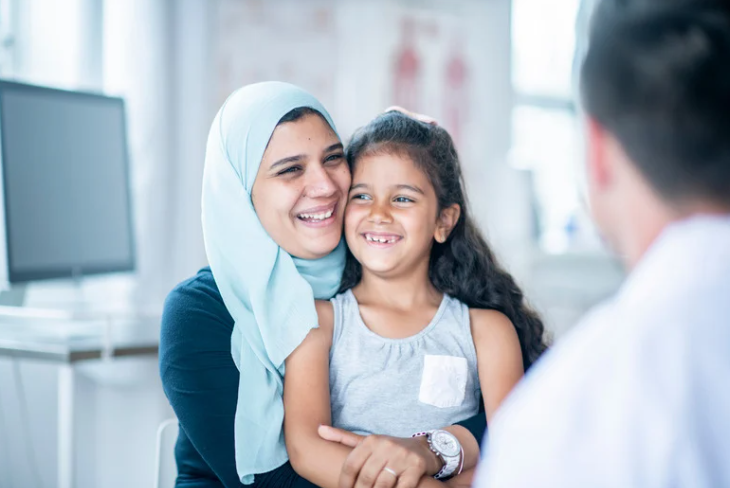
Refugees who are chosen for third country resettlement are assigned to a resettlement country and then assigned to a voluntary agency, or VOLAG. The VOLAG then finds an appropriate resettlement site for each case and assigns that case to the local refugee resettlement agency, like CCIEC.
Since we started more than 45 years ago, we have resettled more than 17,000 refugees from 60 countries. Most of the refugees that come to us have no family or connections in the United States and require help and support while they learn English and become acclimated to a new culture.
But with the help of our compassionate team, refugees who come to Lansing are able to secure jobs, go to school, own homes and businesses and become thriving parts of our community.
How Do Refugees Resettle in the U.S.?
Today, there are more than 65 million people in the world who have fled their homes for these reasons. Half of all refugees are children.
Many refugees begin their journey by fleeing to a neighboring country and seeking asylum, living in refugee camps as undocumented migrants. After they are identified and interviewed by the United Nations High Commissioner for Refugees (UNHCR), they can be granted refugee status and can either wait for peace to return to their home country, stay in their country of first asylum or resettle in a third country.
Less than one percent of refugees will resettle in a third country, like the United States. Resettlement in a third country is the last resort for only the most vulnerable cases. The thorough process takes an average of 18 months to complete.
Our Impact
Abdullah Mahmood, co-owner of Noosh Afghan Cuisine and previous Refugee Services client, shares his resettlement story
“They are good people and they will always be glad to help. They will help however they can. They will not leave people disappointed.”
– Khatera, Previous Refugee Services Client
Total Clients Served in 2025
Clients Assisted in Finding Employment in 2025
Refugees Served Since 1975
Community Benefits of Refugee Resettlement
Cultural Diversity
Lansing took the Welcoming Michigan coalition’s pledge to become a “Welcoming City” for all refugees and immigrants. Refugees bring a wealth of cultural diversity to the Lansing community. Their presence enriches our neighborhoods with unique traditions, languages, and perspectives, fostering a more inclusive and vibrant society.
Social Impact
By welcoming refugees, we strengthen our social fabric. They bring resilience and determination, often becoming active participants in community development and civic engagement, which enhances the overall quality of life for all residents.
Economic Contributions
Refugees play a crucial role in bolstering the local economy. Over half of Michigan immigrants (64.4%) are of working-age, compared to just 50.8% of the non-immigrant population in Michigan. Currently our agency has more than 20 employers who are requesting workers in diverse sectors of our local economy. Many companies would be unable to function at their current capacities without this pool of workers to hire from. Many start their own businesses, creating jobs and contributing to the economic growth of the region. Their entrepreneurial spirit and hard work are invaluable assets to our community.
Help Welcome Newcomers to Lansing
Your generous gift will help us continue to provide our services to refugees who are resettling in our community.
Cristo Rey Campus
1717 N. High Street
Lansing, MI 48906
St. Vincent Campus
2800 W. Willow St.
Lansing, MI 48917
Call Us: (517) 372-4700
Hours: Monday - Friday, 8AM – 5PM
Call Us: (517) 323-4734
Hours: Monday - Friday, 9AM – 4PM
